Fuel is the biggest running cost you can actually control on a delivery vehicle. The hire rate is fixed once you’ve booked. What you spend at the pump depends on how the vehicle is chosen, loaded and driven.
Whether you’re running a bakkie on short local drops, a van on a parcel route or an 8-ton truck up the N3, these tips will cut your diesel bill without slowing down your deliveries.
1. Start With the Right-Sized Vehicle
The biggest fuel saving happens before anyone turns a key. A half-empty truck drags extra weight and frontal area along every kilometre. A vehicle that’s too small means two trips where one would have done.
- Small, light loads and quick local runs: bakkie hire is the cheapest way to move tools, materials and small consignments around town.
- Parcels, stock and anything that must stay dry and locked away: van hire gives you an enclosed, secure load area with car-like running costs.
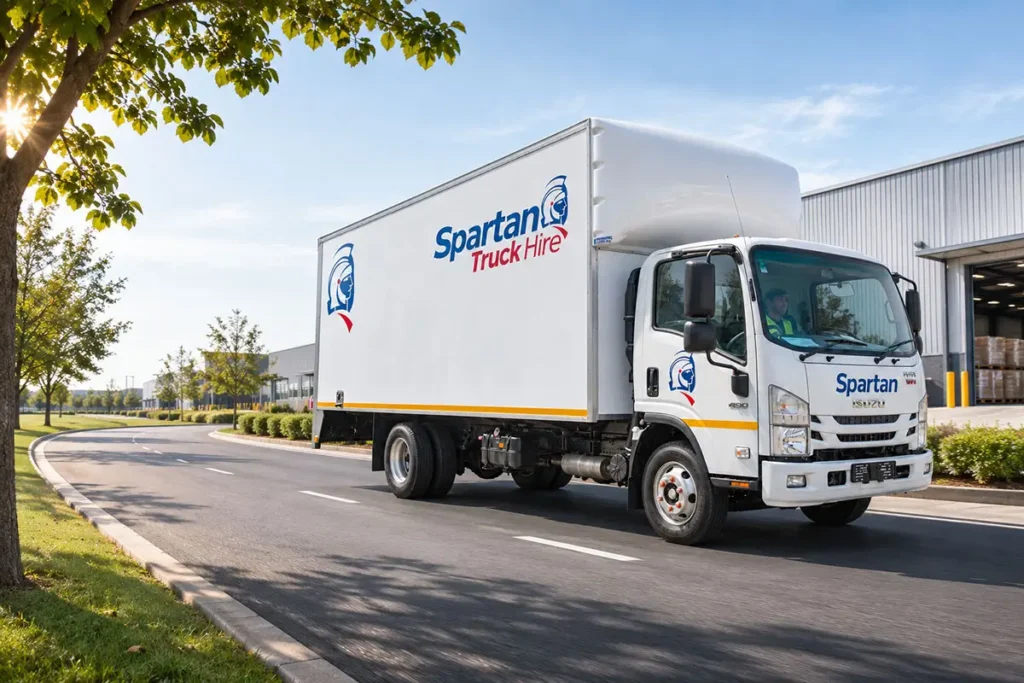
- Pallets, bulk stock and full loads: Spartan’s truck hire fleet runs from 4 to 32 tons, so you can match the truck to the load rather than the other way round.
A bigger vehicle uses more fuel per kilometre. If it moves the job in one trip instead of two, it often uses less fuel per tonne delivered. If you’re unsure which size you need, give the branch your load and route and they’ll size it for you.
2. Plan Routes and Drop Order
Every kilometre you don’t drive is fuel you don’t buy.
- Group drops by area and run them in a logical loop, not in the order the orders came in.
- Avoid peak traffic where you can. Stop-start crawling on the N1, N12 or R21 at rush hour burns fuel while covering almost no distance.
- Use a live traffic app before you leave, not once you’re already stuck.
- Combine small jobs into one run instead of sending a vehicle out three times a day.
3. Watch Your Speed
Wind resistance climbs sharply as speed rises, and delivery vehicles are basically boxes on wheels. On the highway, easing off by 10–20 km/h is one of the quickest fuel savings available, especially in a van or panel-van truck.
Remember that goods vehicles with a GVM over 9,000 kg are limited to 80 km/h in South Africa. Sitting steadily at the limit is more economical than constantly speeding up and backing off.
4. Drive Smoothly
Harsh acceleration and late braking waste the fuel you just burned.
- Look further ahead and lift off early when you see a red robot or slowing traffic.
- Pull away gently, especially when loaded.
- Keep a safe following distance so you’re not constantly braking for the vehicle in front.
- On long climbs such as Van Reenen’s Pass, build momentum on the approach rather than flooring it halfway up, and ease off over the crest.
5. Use the Gears Properly
Diesel engines make their pulling power low in the rev range. In a manual, change up early and keep the needle in the green band of the rev counter, if the vehicle has one. Don’t labour the engine in too high a gear on a hill either, because that wastes fuel and strains the drivetrain.
6. Cut the Idling
An idling engine gets zero kilometres per litre. If you’re waiting at a loading bay, a customer’s gate or a site entrance for more than a minute or two, switch off.
Modern diesels don’t need to idle for long to warm up. Driving off gently warms the engine faster and wastes less fuel.
7. Check Tyre Pressures
Under-inflated tyres increase rolling resistance, use more fuel and wear out faster. Check pressures when the tyres are cold, against the figures for the load you’re carrying. Many vehicles specify a higher pressure when fully laden. A quick check at the start of a shift takes two minutes.
8. Load Smart
- Carry only what the job needs. Spare pallets, old stock and toolboxes left in the back are dead weight you pay to move.
- Spread the weight evenly. A balanced load handles better and is safer to brake with.
- Keep it tight. Close curtains properly, tie down tarps on a bakkie’s load bed and keep the tailgate up. Flapping covers and open tailgates add drag without saving anything.
9. Aircon or Windows?
Around town at low speeds, open windows are fine. On the highway, open windows create drag, so close them and run the aircon on a moderate setting instead.
10. Measure It
You can’t improve what you don’t track. Record litres and kilometres from every fuel slip and work out consumption:
Litres ÷ kilometres × 100 = litres per 100 km
Compare by vehicle, route and driver. Big differences between two drivers on the same route usually point to driving habits, not the vehicle.
Let Spartan Help You Run Leaner
Spartan Truck Hire has been in business since 1981 and runs a properly maintained fleet of bakkies, vans and trucks from branches in Johannesburg, Centurion, Durban and Cape Town. You can hire by the day, week or month, and add an experienced driver and crew if you’d rather leave the driving to professionals.
Call 0861 772 782 or complete our quote request form, and we’ll help you pick the most economical vehicle for the job.
Let Spartan Help You Run Leaner
Does a bigger truck always use more fuel?
Per kilometre, yes. Per load delivered, not necessarily. One trip in a correctly sized truck often uses less fuel than two trips in a smaller vehicle.
Do I need to idle a diesel to warm it up?
No. Modern diesel engines warm up faster when driven gently for the first few kilometres than when left idling.
What is the speed limit for trucks in South Africa?
Goods vehicles with a gross vehicle mass over 9,000 kg are limited to 80 km/h, or lower where signposted.
How do I calculate fuel consumption?
Divide the litres used by the kilometres driven and multiply by 100. That gives you litres per 100 km.